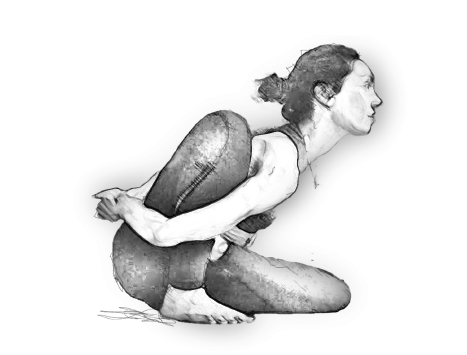
Sometimes the simplest things are subtle and complex.
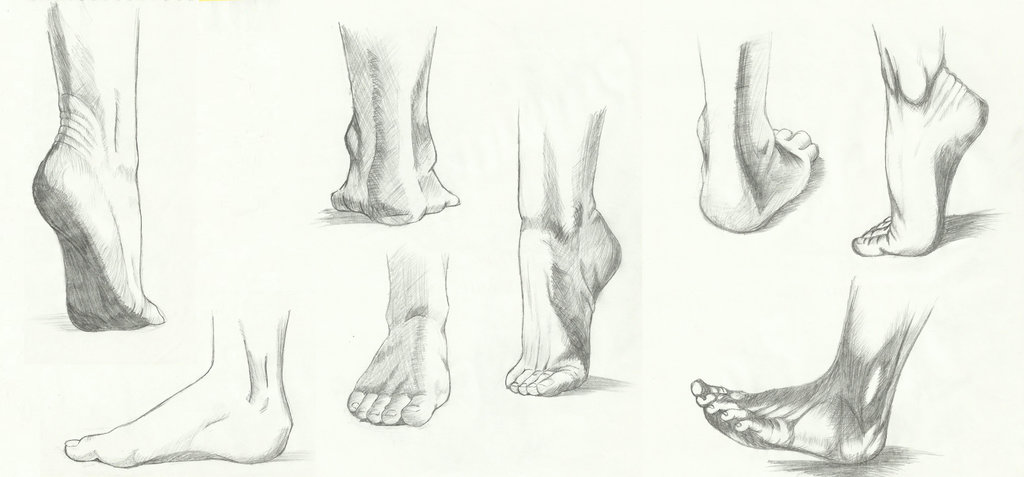 Standing on your own feet, for example. Chances are, unless you have spent a lot of time in a yoga room or a dance studio, you are deeply disconnected from your own feet. Which is such a shame…because the alignment of your whole body starts with the alignment of the bones in your feet.
‘Maximize your connection to the earth.’ -E. Sitzler
Starting with your feet makes so much sense! As my teacher once said to me in a precarious balancing posture,
‘If you want to come out (of the posture) alive, first bring your focus DOWN….and then focus UP!’
How to stand on your feet 101
- Bring feet together, toes and heels together.
- Allow for space between your toes and lengthen them forward toward the mirror. Not gripping the floor. Don’t strangle your towel with your toes! Toes and feet should be soft.
- Distribute your body weight evenly across the four corners of each foot: the base of the big toe (first metatarsal), the base of the baby toe (fifth metatarsal), the inside heel, and the outer heel.
- Press your feet into the floor. Imagine making cartoon footprints in the sand. Perfect cartoon footprints, of even shape and depth.
- Press insteps down and lift the inner arches of your feet.
- Bring inner ankles to touch, if your anatomy allows.

Slowly move your focus up your body.
- Lift knee caps up
- Contract your quadricep muscles
- Hip muscles (aka your butt) tight and contracted
- Push the points of your two hips forward towards the mirror
- Suck stomach in and up. Scoop your belly.
- Stretch your spine up towards the ceiling. Think I am pulling on your hair.
- You are decompressing your whole body away from the floor.
- Palms face slightly forward.
- Fingertips stretch down towards the floor.
- Meet your own eyes in the mirror.
- See stillness, strength and balance in the mirror.
- Practice, practice, practice.
Make a conscious effort to ‘stand on your feet’ everywhere you go in everything you do.
When you build a house, you start with two things: strong ground (your breath) and a solid foundation (samasthiti).
If you hang in your skeletal system and your bone joints, the weight of your house is resting on drywall. Your house will collapse. You are no longer practicing yoga therapy. You are practicing nontherapeutic injury.
You are learning to use your neuromuscular system (the frame and studs of our house) to support your posture, rather than your bones and joints (the drywall). Muscle contraction in this posture is a good thing! By using your muscles, you are creating awareness. With awareness comes control, safety and beauty.
Knee caps, pelvic floor, rib cage and neck spine stretch up.
Feet, cocxyx, fingers, and shoulders release down.
The base of the big toe is the steering wheel for your entire leg, so it deserves extra attention and care. When the base of the big toe presses into the floor, it creates alignment and stability in the lower leg. The thighs are then able to draw back, and the gluteal muscles contract; an outer rotation is created in the upper leg.
All standing postures are balancing postures. Even Samasthiti (first position, resting posture).
As always, all credit for correct and helpful informations goes to my teachers, in particular Chris Fluck, David Garrigues, Carolyn Jensen and Craig Villani. All errors are my own.

 Megan LvR